

- Introduction
- December 25, 2025
Brake pads might not be flashy components, but they are fundamental to automotive safety. Over the decades, pad materials have evolved significantly – from early asbestos-based linings, to high-metal semi-metallic compounds, and now to advanced ceramic formulations. Each leap in material science has improved braking performance and safety. However, many professionals still regard ceramic brake pads as a luxury for high-end cars or a marketing gimmick, failing to recognise their transformative benefits in today’s safety- and environment-conscious era. In fact, we have ample reason to update our perspective on ceramic pads. This is not just a materials upgrade; it’s a revolution in driving experience. As a leading European brake pad brand, ETF aims to dispel outdated perceptions and demonstrate why ceramic brake pads are poised to become the new standard in the aftermarket.
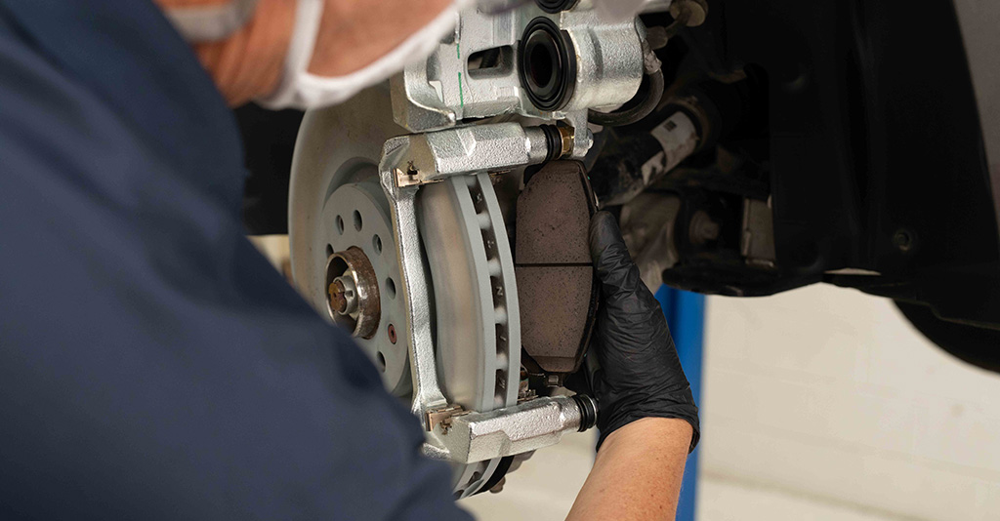
Figure 1. Installation of ceramic brake pads on a disc brake system.
Evolution of Brake Pad Materials
The history of automotive brakes is closely tied to advances in material technology. Brake pad formulations have broadly progressed through three generations:
1.Asbestos Pads (First Generation): In the early 20th century, asbestos fibres were used in brake pads for their heat resistance. While they offered improved fade resistance initially, asbestos was later found to pose severe health hazards (inhaling asbestos dust causes lung disease), leading to asbestos pads being phased out entirely.
2.Semi-Metallic and low-metallic Pads (Second Generation): Rising to prominence in the mid-20th century, semi-metallic formulations typically contained around 30–65% metal content (steel fibre, iron powder, etc.). These pads provided higher friction and better heat tolerance than asbestos, but at the cost of noise and dust. Braking with high-metal pads often produced a characteristic squeal and copious black dust. In Europe, manufacturers favoured low-metallic variants (a subtype of semi-metallic with slightly less metal) to balance performance and refinement. These metallic pads delivered strong stopping power but left challenges in comfort and cleanliness.
3.NAO and Ceramic Pads (Third Generation): The latest evolution was the development of non-asbestos organic (NAO) and ceramic-based formulations. Pioneered by Japanese manufacturers and innovative international brake brands, these formulations sought to combine performance with environmental and comfort benefits. “Ceramic” pads are not literally made of porcelain; rather, the term refers to advanced friction compounds using ceramic fibres and fillers with a resin binder, and only minimal amounts of metal or graphite. This pure ceramic (virtually non-metallic) composition offers an ideal blend of high friction, low wear, and cleaner operation. Ceramic and NAO pads first gained popularity in Japan for their quiet and disc-friendly performance, and today they are increasingly recognised worldwide as the future direction for brake pad technology.
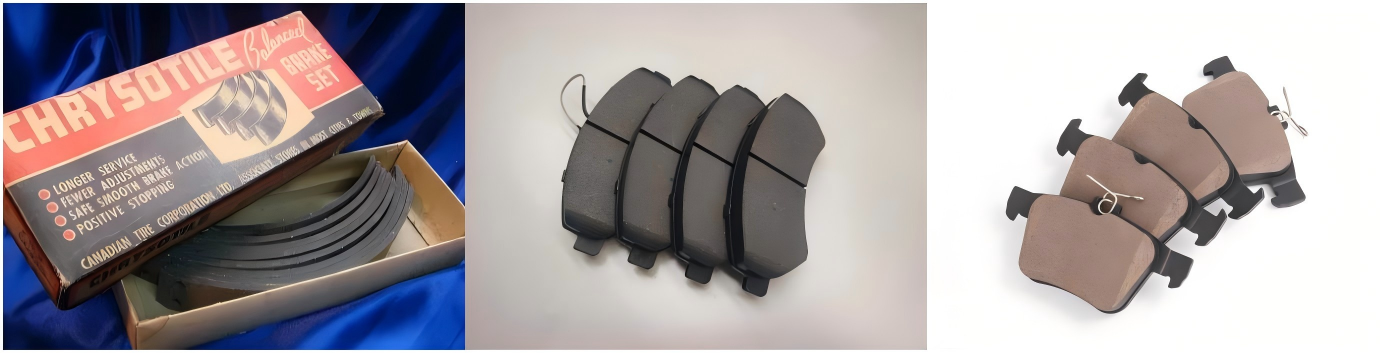
Figure 2. Evolution of brake pad materials:(left) asbestos-based brake pads (first generation); (centre) semi-metallic brake pads (second generation); (right) ceramic brake pads (third generation).
Ceramic Brake Pads: A Performance Revolution
Ultimately, any new brake pad material must prove its worth in performance. Ceramic brake pads have done exactly that, delivering a step-change improvement in braking capability and consistency. Key performance advantages of ETF pure ceramic pads include:
Stable Friction and Fade Resistance: From the first press of the pedal to repeated hard stops, ceramic pads maintain a high and stable friction coefficient, providing confident initial bite and consistent stopping power. This is in stark contrast to traditional pads that can overheat and “fade” during heavy braking – when brake discs heat up, ordinary pad friction can drop, causing a soft pedal and reduced braking force. Ceramic formulations excel at resisting this heat-induced fade. Even as disc temperatures climb into the hundreds of degrees, quality ceramic pads continue to “bite” reliably. In fact, tests have shown that at brake disc temperatures as high as ~650 °C, premium ceramic pads can sustain a friction coefficient around 0.35–0.55, ensuring the vehicle retains strong braking performance. In other words, under high-temperature conditions they deliver nearly full braking effect with minimal fade – a stark safety advantage. This superior high-temperature stability stems from the ceramic material’s excellent heat tolerance and low thermal conductivity, which prevent the pad from degrading or transferring excessive heat into the brake fluid and caliper. The result is dependable braking even on long downhill drives or repeated emergency stops, without the pedal turning spongy. (Gone is the old myth that ceramic pads need to “warm up” to work well – modern ceramic pads offer decisive bite even when cold.)
Longevity and Disc-Friendly Design: Ceramic pads are also built for endurance. The material’s wear resistance means the friction interface can tolerate extremely high temperatures without significant decomposition, so the pads themselves wear at a slower rate. In practical terms, vehicles equipped with ETF ceramic pads enjoy longer pad life and less frequent replacements – a clear cost benefit for fleet operators and drivers alike. Moreover, thanks to the low-metal or metal-free formulation, ceramic pads are gentler on the brake discs. They provide ample friction without the aggressive abrasiveness of high-metal pads, thereby avoiding scoring or “biting” damage to the disc surface. This extends the lifespan of the brake discs as well. Over time, the balanced friction profile of ceramic pads ensures both the pads and the discs last longer. In sum, ceramic pads achieve a rare balance of high braking efficiency and durability: they deliver strong, stable braking force while significantly reducing wear-and-tear on themselves and the mating discs.
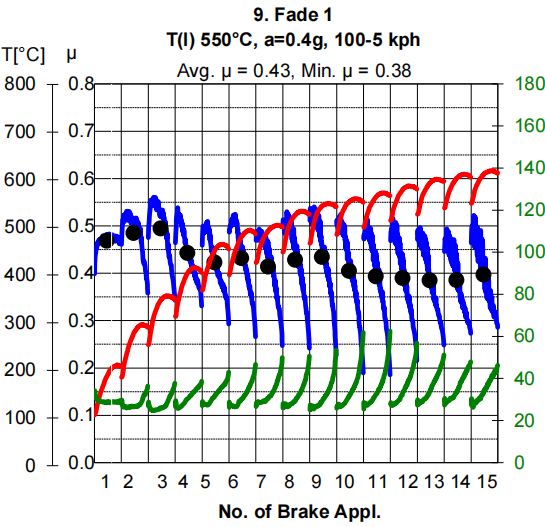
Figure 3: Brake Fade Resistance Comparison
The graph illustrates the fade performance of ETF ceramic brake pads under high-temperature conditions (initial brake disc temperature 550 °C, deceleration 0.4g from 100–5 kph). Despite repeated braking cycles, ETF ceramic pads demonstrate stable friction coefficients with minimal fade — indicated by the consistent µ values throughout 15 consecutive applications. This showcases their superior heat resistance and braking stability even under extreme thermal stress, providing confidence and control in real-world driving scenarios.
A New Level of Driving Experience
If stable, powerful braking enhances safety, the improvements that ceramic pads bring to everyday driving experience are equally noteworthy. Many workshop owners and drivers report that once they switch to ceramic pads, they wouldn’t go back – the difference in refinement is that pronounced. ETF ceramic brake pads elevate the driving experience in several ways:
Quiet, Noise-Free Braking: One of the most immediately appreciated benefits of ceramic pads is the near elimination of brake noise. Traditional semi-metallic pads, loaded with hard metal fibres, tend to produce a high-pitched squeal during braking – especially during light or slow stops – as metal scrapes against the disc. In contrast, ceramic pads don’t contain metal content, drastically reducing this noise source. The result is remarkably quiet braking. Even in typically squeal-prone conditions (such as creeping in traffic or gentle cold stops), vehicles with ceramic pads rarely exhibit the annoying screech that plagues many brakes. The silence enhances driving comfort and lends a more premium, refined feel to the vehicle. Drivers no longer cringe at every stoplight, and passengers are less disturbed by braking noise. This noise-free operation is a key reason many European workshops now recommend ceramic pads to customers looking for an upgrade in comfort.

Figure 4. Quiet and comfortable cabin environment enabled by noise-free braking.
Clean Wheels with Minimal Dust: Another immediately visible advantage is the dramatic reduction in brake dust. Anyone who has lived with aggressive metallic pads knows how quickly their wheels get coated in thick, black dust from pad wear. Not only is this iron-rich dust unsightly, it can corrode wheel finishes over time. Ceramic pads, by contrast, produce far less brake dust – and what dust is generated is lighter in colour and non-corrosive. The ceramic friction material is free of the high metal content that creates dark oxide grime, so wheels stay significantly cleaner. In fact, some drivers report that after switching to ceramic pads, they need to wash their wheels much less frequently. Cleaner wheels don’t just look better; they also indicate a more environmentally friendly pad. Less dust means fewer particulate emissions to pollute the air and less debris buildup on roads. In an era when appearance and environmental impact both matter, this low-dust characteristic gives ceramic pads a clear edge.
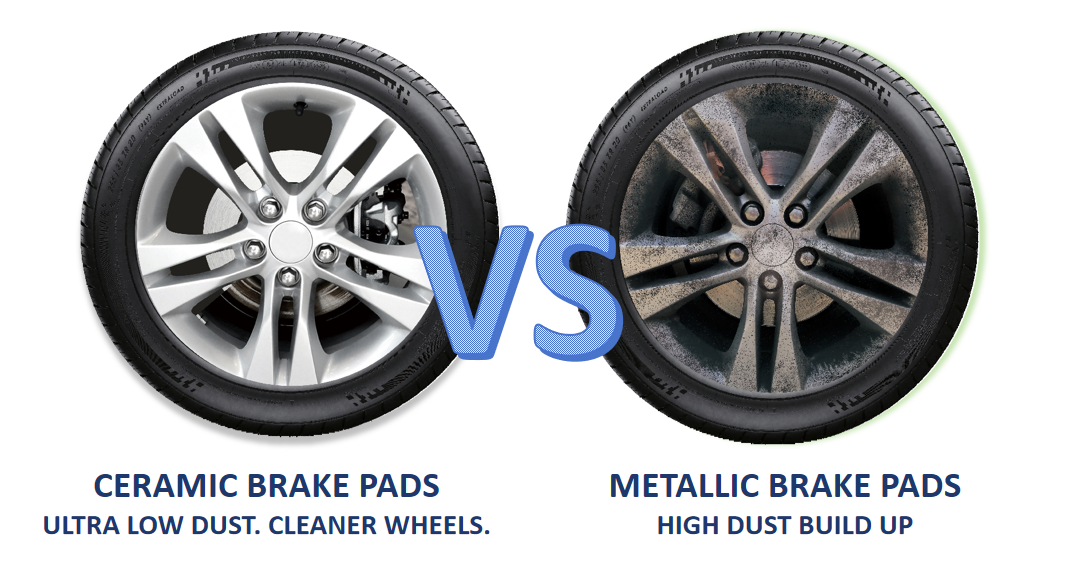
Figure 5. Comparison of wheel cleanliness: ceramic brake pads versus metallic brake pads.
Smooth and Predictable Pedal Feel: Ceramic brake pads also refine the tactile feel of braking, providing a very smooth and linear pedal response. Because the ceramic friction material has a stable and gentle friction characteristic, the brakes engage without the sudden grab or slip that sometimes occurs with other pad types. Pressing the brake pedal yields a predictable, linear deceleration – the car slows down progressively and evenly, with no jarring jerks or vibrations. This makes the vehicle easier to control, especially during gentle braking or when modulating the brakes in traffic. Many high-end vehicles tout a “linear brake pedal feel” as a mark of refinement; ceramic pads help achieve this naturally by virtue of their material properties. Importantly, this smoothness does not come at the expense of stopping power. In emergency braking, ETF ceramic pads still deliver a strong, immediate bite and deceleration. Even when the ABS (anti-lock braking system) engages, the brakes behave progressively – there’s less abruptness or vehicle pitch, since the pad friction is so consistent. Overall, ceramic pads transform braking from a mere necessity (“just stopping the car”) into a confidence-inspiring, pleasant part of the driving experience. It’s braking you can feel as well as trust: quiet, clean, responsive and smooth. This is truly a revolution in driving comfort compared to the harsh, dusty and noisy habits of old brake pads.
Why the Industry Should Rethink Ceramic Pads
Despite the clear advantages, some in the automotive industry have been slow to embrace ceramic brake pads, holding onto outdated notions from years past. It’s time to rethink those assumptions. Several developments make ceramic pads not only viable, but highly desirable as the new aftermarket standard:
Wider Accessibility and Cost Benefits: Early ceramic pads were indeed more expensive to produce, and a decade or two ago they were found mostly on luxury models. That’s no longer the case. As the technology has matured and production has scaled up, the cost difference has narrowed significantly. More importantly, the overall benefits that ceramic pads deliver – longer service life, fewer replacements, less wear on discs, and higher customer satisfaction – can more than offset their slightly higher upfront price. In other words, value has caught up with cost. Today, more and more mainstream vehicles are coming equipped with ceramic or NAO pad formulations as standard or optional equipment. What was once cutting-edge technology for the elite is now an upgrade for the masses. For distributors and repair shops, this means ceramic pads are a realistic offering for a broad customer base, with a compelling total cost-of-ownership story.
Mainstream Adoption Trends: The global brake market is steadily shifting toward ceramic-based and advanced non-asbestos organic (NAO) friction materials, driven by both performance requirements and evolving consumer expectations. Industry estimates indicate that a majority of modern passenger vehicles now rely on low-metallic or organic brake pad formulations, with ceramic and NAO compounds representing a substantial and growing share of total demand. In the automotive aftermarket, a significant portion of North American consumers increasingly favour ceramic brake pads, primarily for their cleaner operation and reduced noise characteristics. Similar adoption patterns are evident across Europe and Asia, where ceramic pads were initially concentrated in premium vehicle segments and are now progressively moving into mid-range and entry-level models. As a result, ceramic-based brake pads are widely regarded as an emerging industry standard rather than a niche upgrade. For manufacturers, distributors, and workshops alike, keeping pace with this shift is essential. Rethinking ceramic brake pads ultimately means aligning with the broader market direction—toward higher-performance, lower-emission, and more refined braking solutions.
Environmental and Regulatory Drivers: Perhaps the strongest push in favour of ceramic pads comes from the evolving environmental regulations. Brake dust pollution and hazardous materials in brake pads have come under the spotlight of regulators. Notably, the European Union’s upcoming Euro 7 emissions standards (taking effect in 2026) will, for the first time, set strict limits on particulate emissions from brakes – as low as 3–11 mg of PM10 per kilometre, depending on vehicle size. This move essentially forces the adoption of low-dust brake technologies. Likewise, traditional pad materials that contain high levels of copper and other heavy metals are being phased out; for instance, the US Copper-Free Brake Initiative mandates reducing copper content in brake pads to under 0.5% by 2025. Globally, nearly half of brake manufacturers have already begun transitioning to copper-free, eco-friendly formulations in anticipation of such rules. Ceramic brake pads naturally fit into this new regulatory landscape. By design, they contain no asbestos or toxic fibres, use little to no heavy metals, and emit far less particulate matter than older pads. ETF’s pure ceramic pads are ahead of the curve here – they are formulated to be Euro 7 ready, meeting the low dust requirements, and they comply with copper-free legislation out of the box. Adopting ceramic pads thus isn’t just a performance or comfort upgrade; it’s becoming a necessity to meet environmental standards and to demonstrate social responsibility in the aftermarket. In short, it is the responsible choice going forward, aligning braking technology with the automotive industry’s broader push for sustainability.
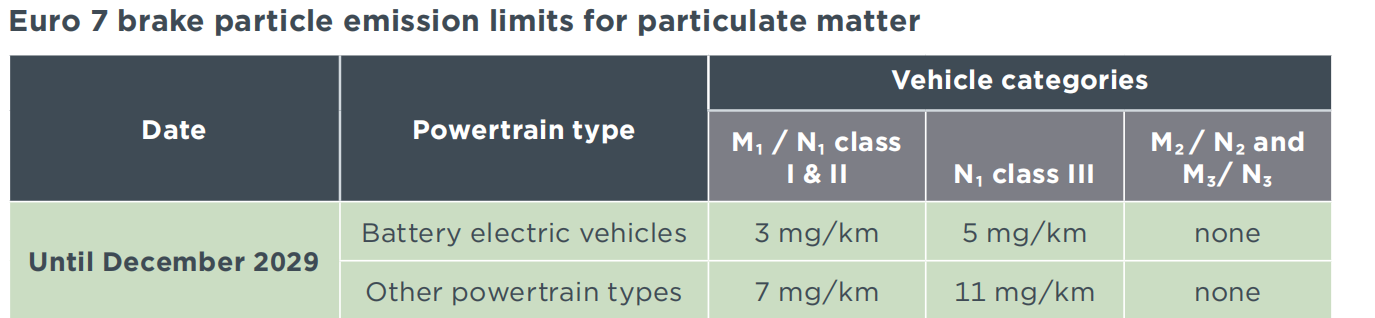
Figure 6. Euro 7 brake particulate emission limits for passenger vehicles.
Conclusion
From material science to on-road performance, ceramic brake pads are redefining what we expect from a brake component. They leverage advanced formulations to overcome the old compromises of previous generations – using stable, high-friction ceramic compounds to guard driving safety with strong and consistent braking force, while simultaneously providing a quiet, clean, and comfortable ride, and offering the longevity and environmental cleanliness that modern regulations demand. Before ceramic pads arrived, it was hard to imagine brakes that could be so effective yet so refined and eco-friendly at the same time. This is exactly why it’s time to rethink ceramic brake pads: they are no longer just another item in a parts catalogue, but a key pillar of the future of braking.
For European distributors, workshop owners, and technical decision-makers, understanding and embracing this shift will be critical. The braking industry is moving into a new era where safety, performance and sustainability go hand-in-hand, and drivers stand to gain unprecedented levels of confidence and satisfaction from their vehicles’ brakes. At ETF, we believe that pure ceramic brake pads are not merely an upgrade, but the new benchmark. Embracing this technology now will help you stay ahead of the competition and meet the evolving demands of both customers and regulators. We have every reason to give ceramic brake pads a new level of priority and expectation – letting this revolution in material and driving experience truly benefit every journey.