

- Introduction
- December 25, 2025
European road transport is on the brink of a significant environmental shift. The upcoming Euro 7 emissions standard – taking effect by 2025–2026 – will, for the first time, set strict limits on particulate pollution from vehicle brakes. For passenger cars, this means brake dust emissions must fall below roughly 7 mg per km (even lower for smaller or electric vehicles), a dramatic reduction from current norms. In parallel, regulators and industry initiatives are clamping down on hazardous substances in friction materials, effectively mandating near-zero copper content (≤0.5% by weight) in brake pads going forward. These new rules are a concrete call to action for the automotive aftermarket: pads that once passed muster will soon fail to meet legal requirements on both particulate emissions and composition.
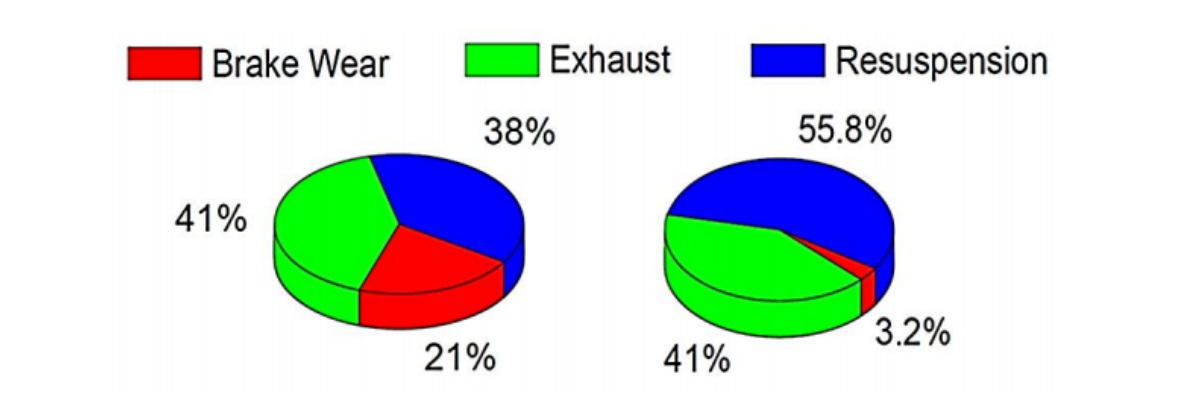
Figure 1. Contribution of brake wear to traffic-related PM₁₀ emissions in urban and semi-rural environments, illustrated by measurements from Zürich-Weststrasse (right) and Reiden (left), Switzerland. Source: Bukowiecki et al. (2009).
The urgency cannot be overstated. EU-sponsored testing has shown that a substantial share of current production brake systems would struggle to comply with the forthcoming Euro 7 particulate limits, with many conventional pad formulations emitting dust levels well above the 7 mg/km threshold under real-world conditions. Without meaningful changes in friction material technology, maintaining regulatory compliance will become increasingly difficult.
This regulatory pressure is effectively accelerating the industry-wide shift toward cleaner, low-dust braking solutions. Importantly, the aftermarket does not need to reinvent braking systems to meet these targets. A mature and proven category of friction materials already exists that is well aligned with Euro 7 requirements. Ceramic brake pads, long recognised for their clean operation and stable performance, are emerging as a highly suitable solution for meeting the new environmental demands placed on braking systems.
This article examines why ceramic brake pads make a compelling environmental case under Euro 7, how they address the new regulatory thresholds, and why workshops and distributors should view this transition not as a threat, but as an opportunity to future-proof their businesses.
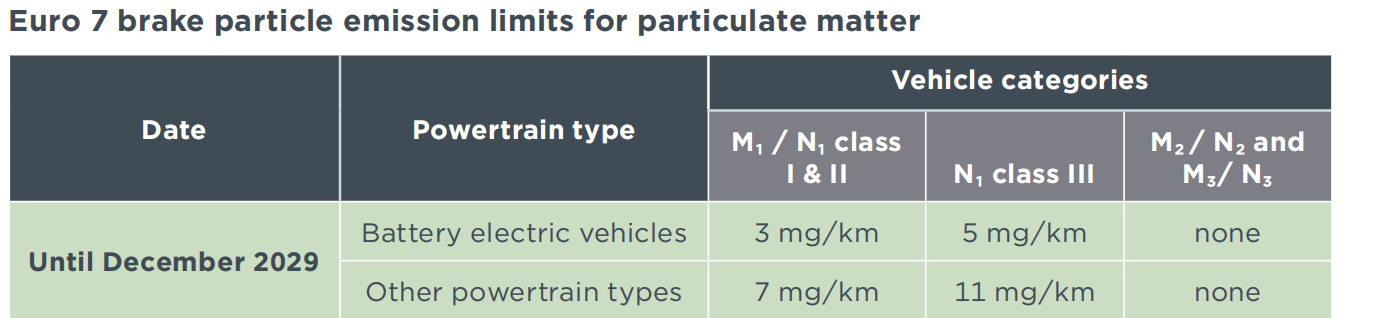
Figure 2. Euro 7 brake particulate emission limits for passenger vehicles.
Modern Ceramic Pads: Low Emissions by Design
“Ceramic” brake pads are engineered from fundamentally cleaner materials than traditional semi/low-metallic pads. Instead of being laden with steel fibres or copper shavings, ceramic pads use mixtures of ceramic fibres, bonding resins and other fillers with little to no metal content. This composition gives rise to several key environmental (and practical) advantages:
Minimal Dust Emissions: Ceramic pads produce very little brake dust as they wear, especially compared to older semi/low-metallic formulations. Drivers notice significantly cleaner wheels – a visible sign of reduced particulate output. Less dust not only means less mess on alloy rims, but also fewer airborne PM₁₀/PM₂.₅ particles harming air quality. In fact, the ultra-fine ceramics in the pad matrix wear more slowly and evenly, so what dust is generated is in smaller quantities and generally lighter, non-metallic particles. (By contrast, high-metal pads tend to shed dark, heavy dust that contributes more to pollution and grime.)
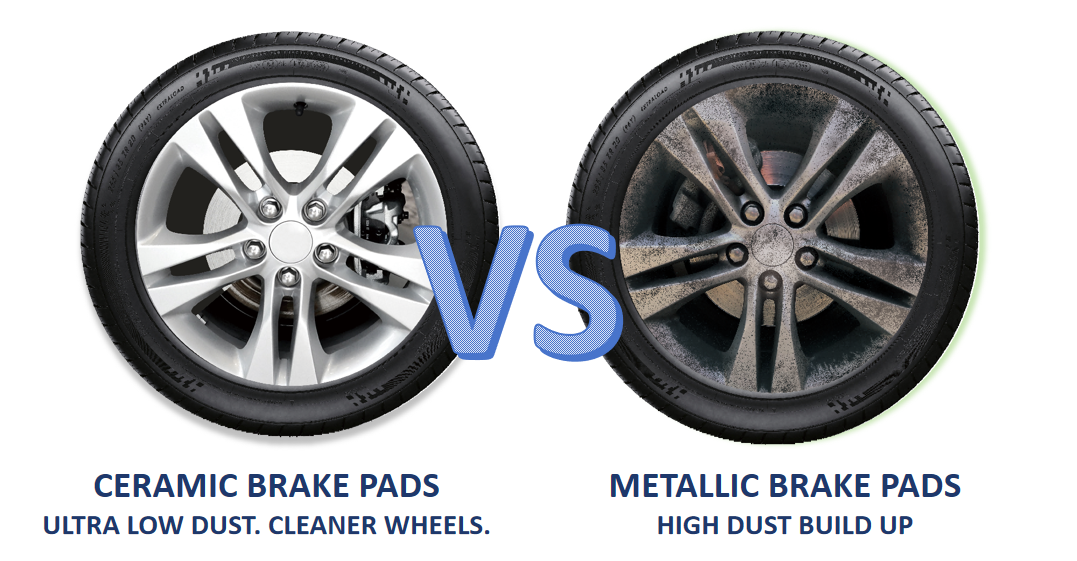
Figure 2. Comparison of wheel cleanliness: ceramic brake pads versus metallic brake pads
Copper-Free, Heavy-Metal Free Composition: Modern ceramic pads are formulated without copper or other toxic heavy metals, aligning with global “Copper-Free Brake” initiatives ahead of the 2025 deadline. This means when the pad does wear, it isn’t releasing microscopic copper flakes that can wash into waterways and poison aquatic life. Ceramic pads meet the intent of new regulations by default – they contain no asbestos or hazardous fibres, and virtually no heavy metals. Choosing ceramic thus ensures compliance with upcoming copper content limits and helps keep harmful metals out of the environment.
Longer Life, Less Waste: The material hardness and stability of ceramic pads give them a longer service lifespan under normal use. Many ceramic pads can last significantly more miles than equivalent semi/low-metallic pads due to their high heat tolerance and wear resistance. A longer-lasting pad means fewer replacements over a vehicle’s life – reducing the manufacturing, packaging and transport footprint associated with frequent pad changes. Moreover, ceramic formulations are gentler on brake discs. Lacking the coarse metallic grit of traditional pads, they cause far less abrasive brake disc wear, which in turn extends the life of the brake discs themselves. Fewer warped or scored discs ending up as scrap metal is an often overlooked environmental win. (Conventional semi/low-metallic pads, by contrast, can act like sandpaper on brake discs – accelerating disc wear and necessitating early replacements.) In lifecycle terms, a switch to ceramic pads means less material consumption and waste overall.
Quiet, Low-NVH Operation: While not an emissions issue, it’s worth noting that ceramic pads run noticeably quieter than their semi/low-metallic counterparts – an important “bonus” benefit that can ease customer acceptance. The absence of hard metal fibres means far fewer high-pitched squeals or grinding noises during braking. In fact, ceramic pads are renowned for their near-silent, smooth stops. This matters for sustainability in a broader sense: as vehicles (especially EVs) become quieter, brake noise stands out more, and low-noise pads improve quality of life for drivers and pedestrians. The refined performance of ceramics proves that environmental compliance doesn’t require sacrificing comfort or quality; we can have clean and quiet brakes at the same time.
Together, these characteristics make ceramic pads an excellent fit for the Euro 7 era. They inherently generate less particulate pollution and contain none of the banned substances that regulators are targeting. Put simply, ceramic brake pads allow vehicles to meet strict new emissions benchmarks without exotic new hardware – it’s a direct material swap that yields cleaner braking. Little surprise, then, that industry analysts are predicting a rapid upswing in ceramic pad adoption as Euro 7 approaches. Even today, ceramic compounds are the fastest-growing segment of the brake pad market, driven by the need for copper-free, low-dust solutions. The writing is on the wall: equipping cars with ceramic pads is one of the most straightforward ways to achieve Euro 7 compliance for brake systems while also delivering tangible benefits to end-users.
ETF’s Pure Ceramic Pads – Ahead of the Curve
Crucially for the aftermarket, the shift to ceramic technology isn’t just a theoretical discussion – it’s already underway, and some manufacturers have been preparing for years. ETF, as a leading European brake brand, has invested early in pure ceramic pad formulations that align perfectly with the new sustainability requirements. ETF ceramic brake pads are formulated to be fully metal-free, containing zero steel or copper in their friction material. By eliminating metal content, ETF ensured these pads are Euro 7-ready out of the box – their dust emissions in testing are comfortably below the forthcoming 7 mg/km threshold, and they automatically comply with copper-free legislation (≤0.5% copper) without any need for reformulation. In other words, ETF pads already meet the environmental standards that others are scrambling to achieve.
Beyond being clean, ETF’s ceramic range was engineered with an eye on real-world performance and longevity. The pads utilise advanced ceramic fibre matrices and proprietary resins to minimise wear rate, so they last longer and generate minimal dust throughout their life. This low-wear design means workshops can fit a ETF ceramic pad and know it will maintain its performance and emissions profile for an extended service interval – a benefit to both the customer’s wallet and the environment. At the same time, the non-abrasive nature of the ETF formulation makes it exceptionally brake disc-friendly. Workshops report that brake discs stay smoother and thicker for longer when paired with ceramic pads, since the pads don’t score the brake discs as aggressive metallic pads often do. This helps customers avoid costly disc replacements and reduces the stream of used cast iron discs that must be recycled or discarded.
Noise performance has also been a key focus. Thanks to their material composition and noise-damping shims, ETF ceramic pads operate in near silence, eliminating the brake squeal that many drivers find irritating. This low-noise characteristic isn’t just a comfort upgrade – it has a business benefit too: it makes it easier for workshops to upsell an environmental product by also calling it a premium product. When a customer hears that a pad can keep their wheels clean and their brakes quiet, any reservations about change tend to fade. ETF pads embody this win-win, delivering a refined braking experience alongside the new environmental compliance. The company’s approach demonstrates that embracing Euro 7 goals can go hand-in-hand with improving overall brake quality. It’s a form of quiet innovation – literally and figuratively – that positions ETF and its partners at the forefront of the aftermarket’s evolution.
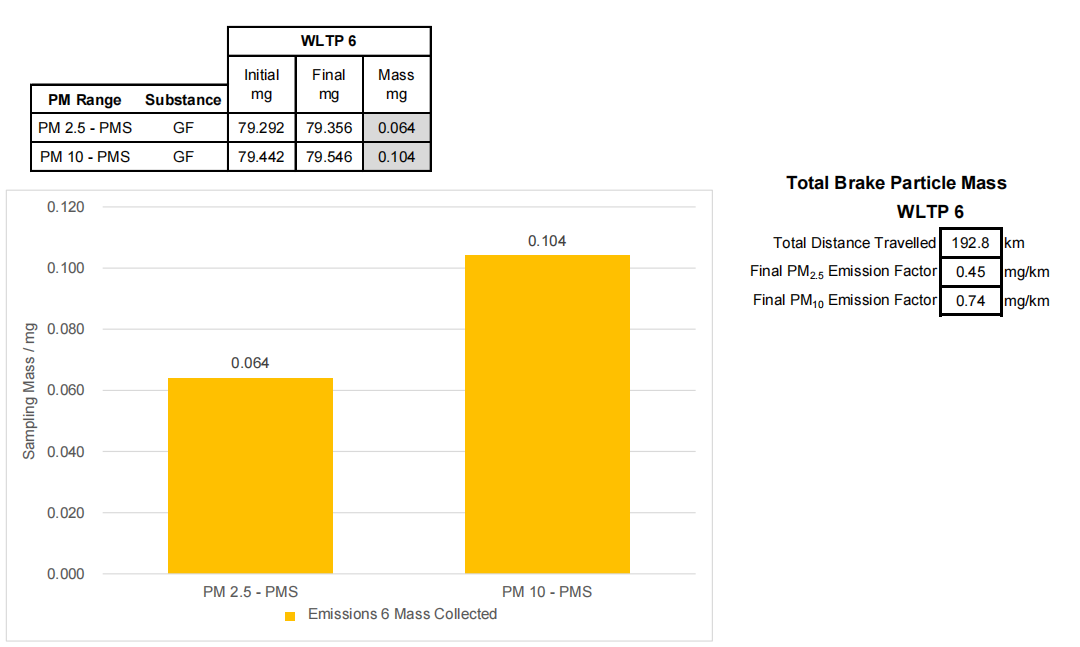
Figure 3. Brake particulate emissions of ETF pure ceramic brake pads measured under the WLTP 6 test cycle. PM₂.₅ and PM₁₀ emission factors remain well below forthcoming Euro 7 limits.
According to recent WLTP 6 testing, ETF ceramic brake pads produce just 0.45 mg/km of PM₂.₅ and 0.74 mg/km of PM₁₀ over a 192.8 km test cycle. These values are 90%+ below the upcoming Euro 7 regulatory threshold of 7 mg/km for PM emissions, highlighting how ceramic pads — especially ETF’s pure ceramic formula — deliver ultra-low emissions in real driving conditions. Compared to typical semi/low-metallic formulations, which often approach or exceed the Euro 7 ceiling, ETF ceramic pads offer a forward-compliant, environmentally friendly solution without compromising braking performance.
Aftermarket Opportunities in an Eco-Conscious Era
For European workshops, distributors, and parts retailers, the advent of Euro 7 should be viewed not as a hurdle but as a timely opportunity. Yes, regulations are tightening – but this very fact opens the door to refreshing your product portfolio and marketing a new generation of “green” brake components. Forward-thinking businesses can get ahead by pivoting to ceramic pads now, turning compliance into a selling point. Consider the advantages for a workshop that becomes known for offering cleaner, Euro 7-ready brake replacements: it can attract environmentally conscious customers, differentiate itself from competitors still pushing old-school metallic pads, and build a reputation as a knowledgeable, responsible operator.
There is also a strong business case in terms of product value. While premium ceramic pads have historically been slightly more expensive than basic semi/low-metallic options, the gap in cost has narrowed – and the value delivered has grown. Customers get tangible benefits (longer pad life, less frequent wheel cleaning, no annoying squeal), which enhance satisfaction and loyalty. From a service perspective, the total cost of ownership often favours ceramic pads when you factor in their durability and the reduced wear on other parts. Workshops can confidently explain to fleet managers or private customers that a higher-spec ceramic pad will save money in the long run (through fewer replacements and protected brake discs) while also ensuring compliance with incoming laws. In an era when consumers are increasingly aware of environmental issues, many are willing to invest a bit more upfront for a product that is cleaner and better-performing. By stocking quality ceramic pads, distributors and garages can tap into this demand and even command a modest premium, justified by the superior specs.
Market trends support this transition. Industry data shows that although semi/low-metallic pads still make up a large portion of pads on the road, ceramic and organic formulations are rapidly gaining share as the new default for passenger cars. In markets like North America, surveys indicate a large segment of drivers now actively prefer ceramic pads due to their cleaner, quieter performance – a trend Europe is also following as awareness grows. Furthermore, vehicle manufacturers themselves are increasingly fitting low-dust, copper-free pads at the factory, especially on electric and hybrid models. The aftermarket must keep pace. Stocking up on compliant ceramic pads ahead of Euro 7 means you’ll be ready to service the latest vehicles and avoid being caught with outdated inventory that can’t be sold on newer cars. It’s also a hedge against future local restrictions – some cities or low-emission zones may eventually require certified low-dust brake components, much as they do for low-emission engines. Early adopters in the aftermarket will be well positioned if/when that day comes.
From a broader perspective, this regulatory shift is a chance for the aftermarket to actively participate in road transport decarbonisation and pollution reduction efforts. By updating your brake pad offerings, you contribute to better air quality and reduced environmental harm. Studies have highlighted that brake wear pollution is a non-trivial part of urban air particulate levels (especially as exhaust emissions are cleaned up) and can affect respiratory health and waterways. Every ceramic pad you install instead of an old metallic one is a small step toward cleaner cities. In that sense, workshops can take pride in this change – it’s not just about avoiding fines, it’s about doing the right thing and letting customers know you’re committed to sustainability. After all, cleaner brakes improve urban air quality and protect public health, outcomes that everyone from city officials to everyday pedestrians will appreciate. The automotive industry’s push for sustainability doesn’t end at the car factory; it extends into the aftermarket, where the choices made in repair shops can collectively have a big impact.
Conclusion
Euro 7’s enforcement will herald a new chapter for brake components – one where low-dust, copper-free ceramic pads become the norm across Europe. The aftermarket community should prepare now for this imminent shift. We have a golden opportunity to turn environmental compliance into a competitive advantage: by embracing ceramic brake pads and educating customers about their benefits, workshops and distributors can lead the charge towards cleaner, greener braking. The countdown to Euro 7 is on, and those who act early will not only ensure a seamless transition when the regulations land, but will also earn the trust of customers looking for modern, sustainable solutions. In summary, the case is clear that ceramic pads are the future. The time is ripe to rethink our inventory, retrain our teams, and gear up for the brake pad revolution ahead – one where performance and sustainability go hand in hand. Let’s get ready now, so that when Euro 7 arrives, we’re already a step ahead and braking with confidence.